V-RING VA

107 product code

V-RING VA

V-RING VA is a sealing component for controlling lubricant leakage and limiting contamination at the mounting position. Confirm size, material and operating conditions before selection.

Loading product code list…

Detailed technical content

A V-Ring rotates with the shaft and seals against an opposing surface

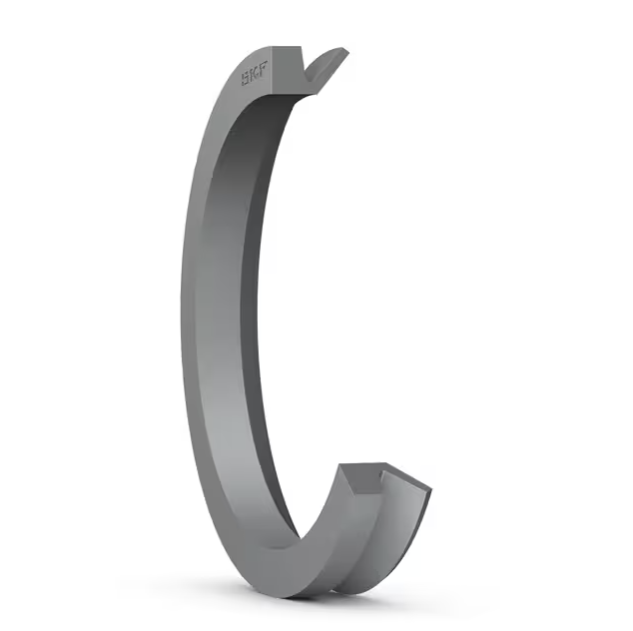
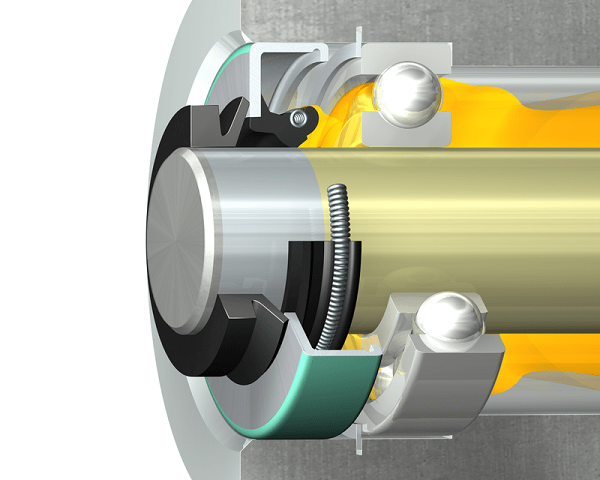
A V-Ring is stretched onto the shaft and rotates with it. Its flexible sealing lip makes axial contact with a stationary surface such as a bearing cover or housing face. This construction differs from a radial shaft seal, whose lip operates directly on the shaft’s cylindrical surface.

DEDE identifies VA and VS as standard forms for unpressurized axial sealing. The sealing lip can accommodate a degree of misalignment and angular deviation, but the counterface must still be sufficiently flat, clean and suitable to prevent uneven wear.

VA and VS must be selected according to installation space and profile geometry

VA and VS should not be treated as the same seal under different names. Each profile has its own geometric proportions and installation dimensions. For replacement, compare the shaft diameter, axial space, sealing-face dimensions and the profile currently in use.

A V-Ring primarily protects the assembly against contaminants and lubricant loss under suitable conditions

Because it is an unpressurized axial seal, the V-Ring is highly useful as a barrier against dust, splashed water or contaminants outside a bearing assembly. It is not intended to replace a seal that withstands a high pressure differential. Where oil must be retained under pressure or the primary seal in a transmission housing is required, another suitable seal type must be considered.

FAQ

Frequently asked questions

Can a V-ring retain pressurized oil like a conventional rotary shaft seal?

It should not be used for that purpose. Manufacturers describe VA and VS profiles as non-pressurized axial seals. If the sealing position has significant pressure differential or must retain oil as the primary rotary shaft seal, select a seal designed for that condition rather than relying only on shaft diameter.

Can VA and VS profiles be directly interchanged when the shaft diameter is the same?

Not automatically. Their geometry and mounting dimensions differ, so the section height, free width, installed width and clearance around the counterface must also be checked. Compare the manufacturer's dimension tables before changing profile.

Can a V-ring accommodate unlimited shaft misalignment?

No. Its flexible lip can accommodate more misalignment and angular error than some seal types, but it still has limits. Excessive misalignment creates uneven contact pressure and localized wear. Correctly align the shaft and sealing face instead of relying entirely on V-ring flexibility.

When replacing a V-ring, does the counterface condition matter?

Yes. The V-ring lip seals directly against an axial counterface, so that surface must be clean, sufficiently flat and free of burrs or scratches that could wear the lip. A correctly sized new V-ring can still perform poorly if the counterface is damaged.

News about Industrial seals