Continue learning about lubrication management with LDT: Part 1
Lubrication management and how to improve performance
Lubrication management can minimize wasted capital, resources and time, improve equipment health, and reduce environmental impact by cutting CO2 emissions and material waste. There is also a formal definition of lubrication management:
“Organizing resources properly to improve reliability, reduce inefficiency and cost, and enhance safety and environmental compliance.”
SKF’s lubricant life-cycle model can help visualize the seven different parts of lubrication management:
- Selection: choose the right product. This can be a subtle process, but tools such as SKF LubeSelect can help by matching actual bearing performance.
- Purchase: select a small number of reliable suppliers that provide consistent product quality.
- Storage: store lubricants that are not immediately ready for use at suitable temperature and humidity, and prevent exposure to contaminants.
- Transfer: colour-code tools and lubrication points to avoid issues such as cross-contamination. Keeping tools clean is, of course, also important.
- Application: regularly check the lubrication quantity and relubrication intervals, whether lubricant is applied to the asset manually or through an automatic system.
- Monitoring: analyze oil or lubricant use to understand whether the lubricant is performing as expected.
- Recycling/disposal: dispose of lubricant correctly. A system such as SKF RecondOil allows oil to circulate, but lubricants are usually replaced, so disposal is still required.
The loop then closes and we return to lubricant selection.
Both the cement-plant and salt-press cases were resolved by applying lubrication management. At the cement plant, the answer was common sense. By documenting the process, we corrected the main system error: using the wrong lubricant. For the salt press, selecting and applying the correct lubricant, properly sealing and monitoring the asset through vibration and grease analysis resolved the issue.
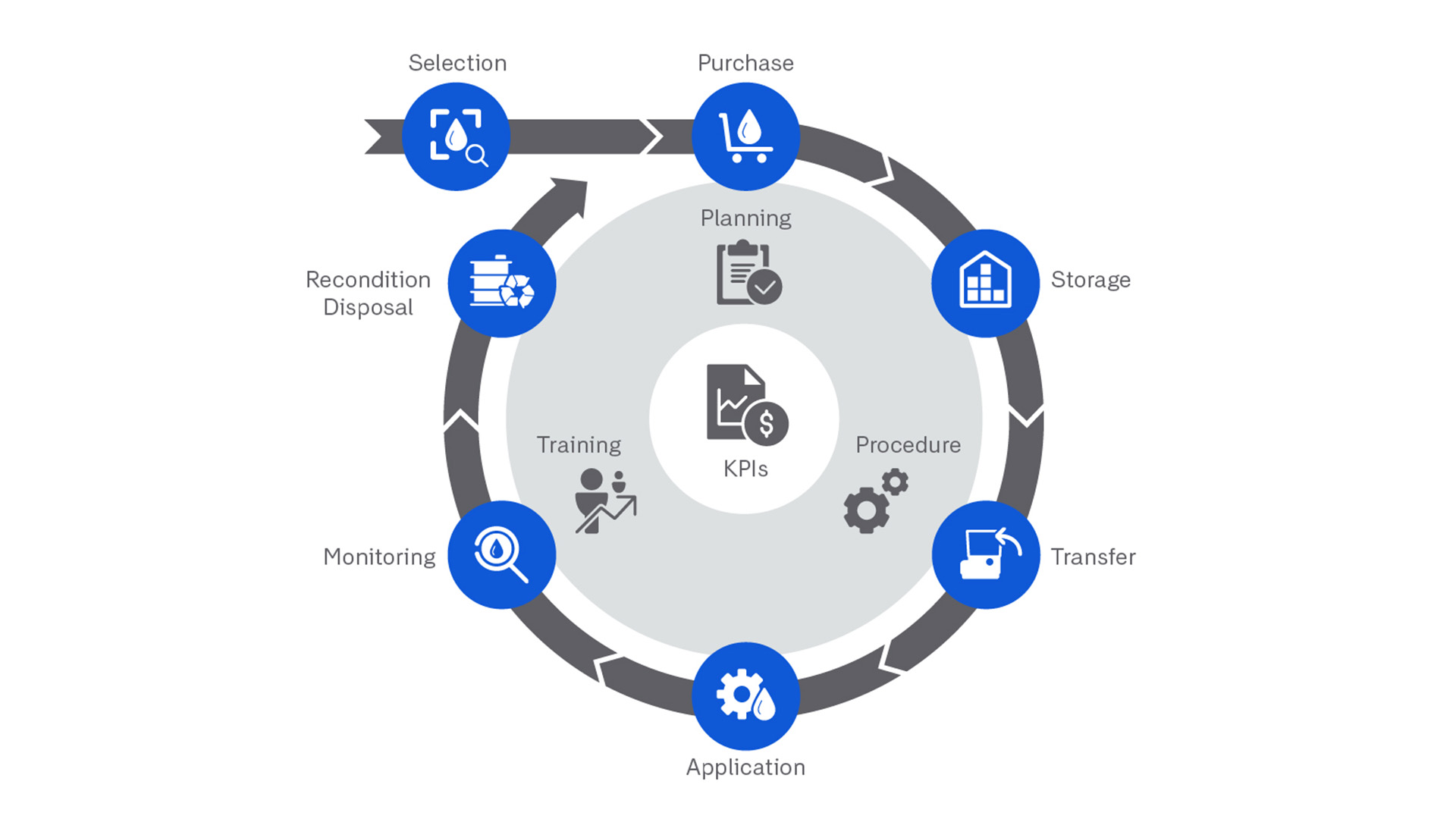
This describes the lubricant life cycle, but the full lubrication-management model has four more important parts: planning & scheduling, procedures, training & personal development, and management & KPIs. Combining these provides a more complete picture of lubrication management.
Dear customer, contact LDT using the information below for advice and special offers!
===================================
Address: No. 121-123 To Hieu Street, Nguyen Trai Ward, Ha Dong District, Hanoi, Vietnam
Business hotline: 02466880598
Fanpage:https://www.facebook.com/BoitroncongnghiepSKF?ref=embed_page