See detailed information about SKF RecondOil filtration technology
What is Double Separation Technology (DST)?
DST is a new technology for regenerating industrial oil. This patented breakthrough can change how we view industrial oil—from a costly consumable into a fully circular asset.
What makes DST different?
DST does not replace conventional filters. Instead, it is an additional feature that takes filtration beyond conventional limits. Your oil becomes cleaner than ever. By removing even the smallest contaminants, we can prevent oil ageing. This means the same oil can be used repeatedly, in some cases indefinitely.
Where can DST be used?
In almost every industry: metalworking; pulp and paper; mining; general manufacturing; marine applications and more. Practically anywhere industrial oil is used.
What are the benefits?
You may never need to buy new oil or dispose of used oil again. Besides saving money, it can substantially reduce your carbon emissions. For many processes, ultra-clean oil can also deliver significant performance improvements and extend machinery life.
SKF RecondOil – Truly circular oil use
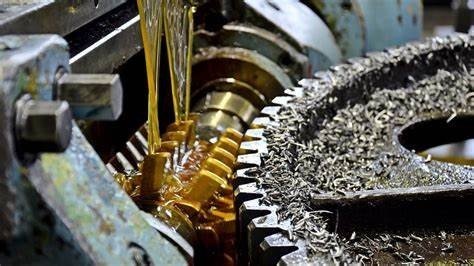
Using oil only once—from production through degradation and disposal before replacing it with new oil—is unsustainable and inefficient.
The main reason is that no viable method of reusing oil has previously been available.
SKF now offers a solution with Double Separation Technology (DST). SKF Double Separation Technology in RecondOil contributes to a more sustainable industry while reducing oil costs and improving performance. Oil life is limited by degradation caused by suspended particles, water and air, which damage equipment and products.
Oxidation causes oil to degrade and lose its properties. Once oil has broken down to this extent, its function is lost and it must be replaced.
If we magnify particulate contaminants in oil, we see many sizes, from centimetres down to micron and nano sizes. The nano and submicron particles are the greatest challenge: they pass through conventional filters and accumulate over time. Billions of such particles create a huge combined surface area that acts as a catalyst for oxidation. Oxidation can also be caused by air ingress and local temperature increases, but is strongly accelerated by nanoparticle accumulation, creating a chain reaction that grows exponentially once started and causes oil degradation.
This means that even if all micron particles are removed by today’s filters, the oil will eventually degrade through oxidation.
Degraded oil affects functions and applications in key industries: metalworking, hydraulics and lubrication.
A degraded surface film can inhibit heat transfer and reduce cooling efficiency.
Hydraulic oil transmits energy, but oxidation and polymerisation create varnish that reduces energy-transfer efficiency.
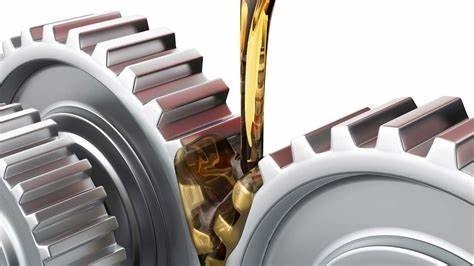
Lubricating oil primarily reduces friction. Oxidation can change viscosity and affect lubrication of rotary, sliding and rolling bearings. At the limit, the lubricated position is damaged, causing property and equipment failure and requiring oil replacement.
Unfortunately, much used oil is simply dumped or burned as fuel, causing serious environmental impact.
A small portion is recycled, usually into lower-grade base oil or asphalt.
SKF Double Separation Technology (DST)
Imagine being able to remove the small particles that cause oil degradation.
SKF Double Separation Technology not only removes contaminants but also prevents the oxidation that ages oil.
SKF DST combines chemical and mechanical filtration and separation. It removes submicron particles to produce oil that is cleaner and better than the original. By removing nanoparticles, DST preserves the oil’s original properties and prevents ageing, so the oil does not reach its disposal limit. Its service life is nearly unlimited and enables truly circular use.
Fresh oil from a plant always contains some contaminants, but DST can refine oil to a level higher than completely new oil.
DST can operate in a circulating system connected to the oil system or as a separate external unit. It can be expanded and connected in modules to match filtration capacity.
Operating principle:

Depending on oil volume, contaminant level and viscosity, the DST system can be adapted to the oil system. The process starts in a settling tank, where an active agent is added to bind suspended particles of all sizes, enlarge them and settle them at the bottom of the filter vessel. The bottom then collects sludge containing contaminants and binder, which is discharged through a separate outlet without removing a large volume of oil. The oil then passes through a special mechanical filtration system that completely removes the binder and suspended particles. It becomes ultra-clean and ready for reuse. Optimal filtration requires precise coordination of temperature, oil vortex speed and filtration time. This is part of SKF’s DST expertise, ensuring that additives—the components that provide oil functionality—are not removed.
Part of the process is sampling and analysing the filtered oil. Results show that filtered oil can be higher quality than new oil and can be used repeatedly in a loop, creating a circular oil cycle.
If your business uses large quantities of oil and you want to extend service life and reduce costs, contact LDT VN for advice on an SKF RecondOil system. Mr. Tan 0827420001, Email: vantan@tstvietnam.vn