Detailed technical content
The four-lip cross-section changes how the ring works in the groove
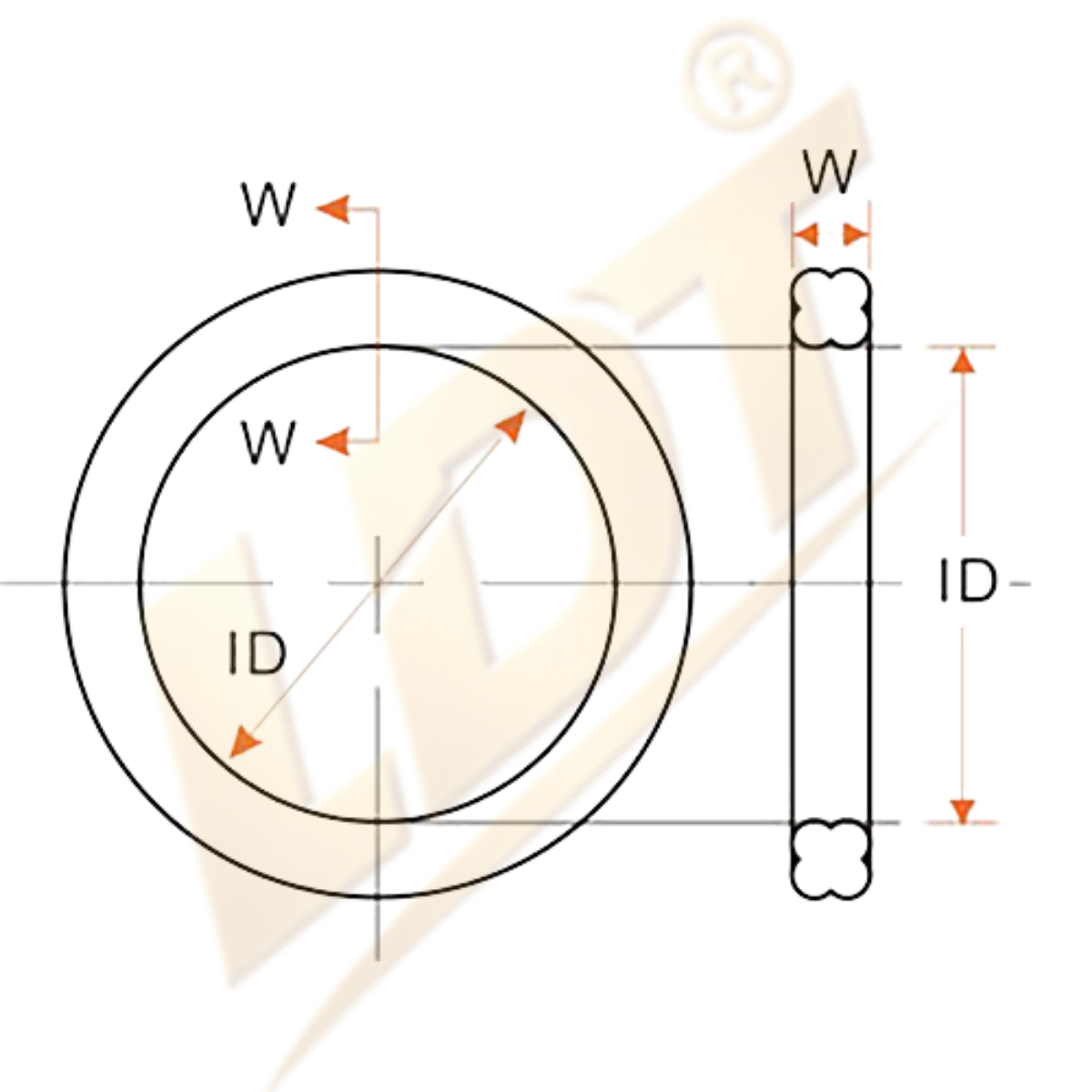
Unlike an O-Ring’s circular cross-section, an X-Ring has a four-lip profile. When installed with appropriate compression, the contact areas create the initial sealing force; as pressure increases, the force against the sealing surface also increases.
Trelleborg states that the four-lip geometry helps an X-Ring reduce its tendency to roll or twist in the groove during reciprocating motion, while creating a lubricant reservoir between the lips and providing lower friction than an O-Ring in many applications.
The installation groove must suit the X-Ring
An X-Ring should not be assumed to fit every groove designed for an O-Ring merely because their nominal diameters are similar. Their cross-sectional dimensions, compression and contact geometry differ; an unsuitable groove may over-compress the ring or fail to provide the required sealing force.
Material remains a decisive factor
The geometric advantage does not replace the need to select the correct material. X-Rings are manufactured from various elastomer materials; selection must be based on the medium, temperature, pressure, speed and type of motion. In dynamic applications, surface quality and lubrication also significantly affect friction and service life.