Clearance in Bearings – In mechanical engineering and industry, bearings play a vital role in transmitting motion, reducing friction and ensuring stable machinery operation. One key technical factor affecting bearing performance is bearing internal clearance. Selecting the correct bearing internal clearance standard not only helps extend bearing life but also limits failures, reduces maintenance costs and improves equipment performance.
1. What is bearing internal clearance?
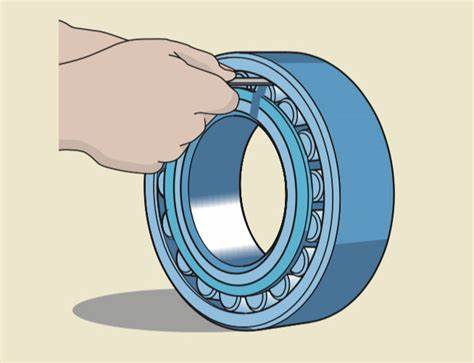
Bearing internal clearance is the total distance through which one bearing ring can move relative to the other between the rolling elements and the raceways of the inner and outer rings. It determines the freedom of movement of the rolling elements inside the bearing.
There are two basic types of bearing internal clearance:
- Radial internal clearance: The displacement of the inner ring relative to the outer ring in a direction perpendicular to the shaft.
- Axial internal clearance: The displacement of the inner ring relative to the outer ring in a direction parallel to the shaft.
2. Classification of bearing internal clearance
Under international standards such as ISO and DIN, bearing internal clearance is designated by the following classes:
- C2: Clearance smaller than Normal.
- CN (Normal): Normal clearance.
- C3: Clearance greater than CN.
- C4: Clearance greater than C3.
- C5: The largest clearance class, used for special conditions.
In practice, C3 and C4 are common classes in heavy industrial applications because they accommodate operating conditions involving high temperature and heavy loads.
3. Why selecting the correct bearing clearance matters
Selecting the correct bearing internal clearance standard directly affects:
- Bearing durability: Insufficient clearance can increase friction and heat, leading to premature failure.
- Operating performance: Excessive clearance can cause bearing vibration, noise and reduced machine accuracy.
- Load-carrying capability: A bearing needs appropriate clearance to distribute loads across its rolling elements.
- Equipment reliability: Stable machinery operation reduces the risk of unexpected shutdowns caused by bearing failure.
4. When should C3, C4 or C5 clearance be used?
- C3 clearance: Used for equipment operating at high temperatures and medium to high speeds, or where tight fits reduce internal clearance. Examples include electric motors and industrial gearboxes.
- C4 clearance: Suitable for machinery subject to heavy loads, high speeds and harsh temperature conditions. Examples include steel rolling mills, turbines and large industrial fans.
- C5 clearance: Applied under special conditions where bearings operate under extremely heavy loads and very high temperatures.
5. How to inspect and measure bearing clearance
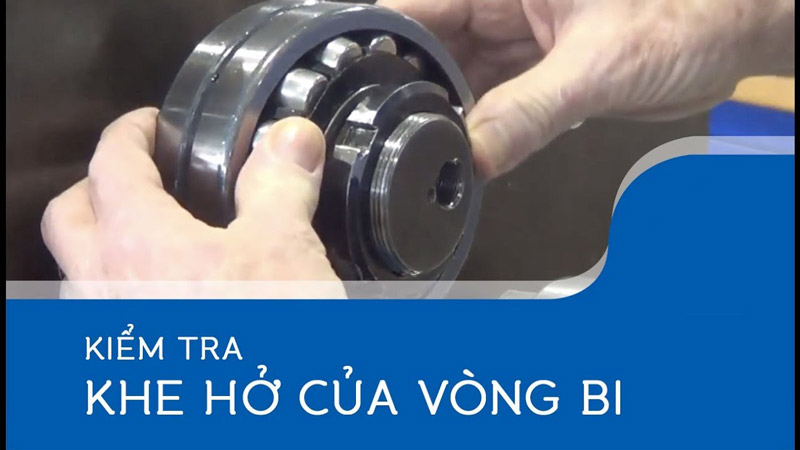
To verify the required clearance, engineers commonly use a feeler gauge or specialized measuring equipment. SKF and other major bearing manufacturers provide standard clearance tables for individual bearing designations, supporting faster and more accurate selection.
6. Common problems caused by incorrect bearing clearance
If the wrong bearing internal clearance standard is selected, equipment may experience:
- Excessive bearing temperature due to insufficient clearance.
- High noise and strong vibration when clearance is excessive.
- Uneven bearing wear, reducing service life.
- Unexpected machinery shutdown, resulting in production losses.
7. How to select suitable bearing clearance
- Consider operating conditions: speed, load and temperature.
- Pay attention to the fit: Tight fits on the inner or outer ring can reduce actual internal clearance.
- Refer to the manufacturer’s technical documentation: Consult SKF, NSK, FAG and other manufacturer guidance for accurate selection.
- Inspect periodically: Ensure that bearing clearance does not change abnormally during operation.
Conclusion
Bearing internal clearance standards are an important technical factor in durable bearing operation, friction reduction and machinery performance. Businesses should understand the C2, CN, C3, C4 and C5 clearance classes and select the appropriate class for the operating conditions. Correct clearance selection not only reduces maintenance costs but also extends bearing life and supports the stability and safety of the entire industrial machinery system.
LDT is proud to be a major SKF partner. In addition to supplying genuine products, LDT’s sales engineers provide advice and propose optimal technical solutions.
Dear customers, contact LDT today using the information below for advice and special offers!
===================================
Address: 121-123 To Hieu Street, Nguyen Trai Ward, Ha Dong District, Hanoi, Vietnam
Business hotline: Mr Toan : 0948.068.692
Fanpage:https://www.facebook.com/BoitroncongnghiepSKF?ref=embed_page